

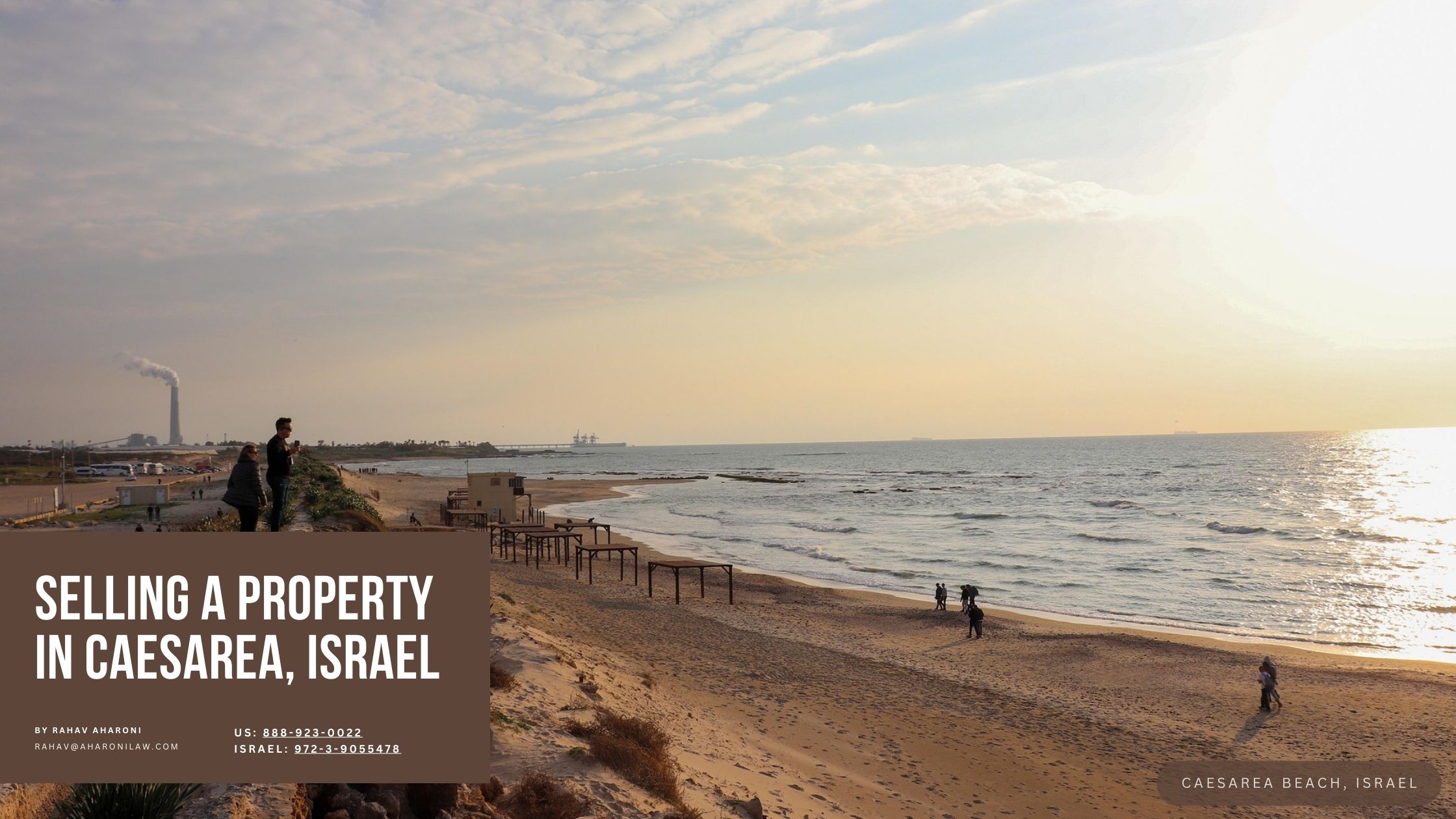
As a non-resident of Israel, you own or have inherited property in the highly desirable Israeli town of Caesarea, and you wish to sell the inherited property. Caesarea is considered “The Bel Air of Israel”; many of its ancient sites are 2,000 years old. Caesarea is the most desirable real estate location in Israel. Selling your Israeli property should not be difficult.
The process of selling real estate in Israel for a non-resident is similar to that of any Israeli seller, except that you’ll likely use a Power of Attorney to let your lawyer represent you in Israel for the sale (so you don’t have to travel for signatures or meetings). As your representatives, we can coordinate everything, down to the smallest detail, and handle all negotiations and signing on your behalf. Many of our U.S. clients appreciate that they can rely on us as their local fiduciary, keeping them updated at every step while sparing them the need to be physically present.
The Process of Selling Israeli Real Estate For Foreign Owners.
Engage Your Team and Set a Strategy
We start by reviewing your property’s legal status (is it already in your name, or are there any co-owners?) and discussing your goals (desired timeline and price expectations). We’ll advise on any pre-sale steps. For example, if you inherited the property, as mentioned, we handle the Israeli probate.
Saving Listing and Finding a Buyer
Next, if you haven’t already found a buyer, you’ll likely list the property for sale. We can save that commission for any seller. Given the Real estate in Caesarea’s appeal, demand is often substantial.
Make sure your listing includes all the many benefits and features of living in Caesarea:
- Historical Significance: Rich archaeological sites, including ancient Roman ruins and aqueducts;
- Coastal Location: Beautiful Mediterranean beaches and scenic waterfront views;
- Real Estate Variety: A mix of luxury villas, apartments, and historic properties;
- Luxury Lifestyle: Access to high-end amenities, including gourmet restaurants, shops, and exclusive communities;
- Proximity to Major Cities: Close to Tel Aviv and Haifa for easy commuting;
- Cultural Events: Various festivals and cultural activities throughout the year;
- Quality of Life: High standard of living with parks, recreation areas, and amenities;
- Tourist Destination: Attracts tourists, enhancing rental property potential;
- Golf Courses: Home to the Caesarea Golf Club, offering recreational facilities;
- Infrastructure Development: Ongoing improvements in local infrastructure, enhancing connectivity and property values;
- Investment Potential: Strong demand for properties due to its historical significance and tourism appeal, making it a good investment opportunity.
When offers come in, we advise how we can maximize your equity on your terms and conditions. Once you accept an offer, the process moves to the contract stage.
Signing the Sale Contract
The sale agreement in Israel will be drafted by the lawyers (often the buyer’s lawyer prepares a first draft, which we then negotiate and modify to protect you as the seller). It will specify the price, what is included in the sale (for example, any furnishings or extras), the payment schedule the buyer agrees to follow, and the seller’s responsibilities.
Some seller responsibilities include providing a clear title (we’ll obtain an up-to-date Tabu deed and, if there’s any mortgage, arrange for its release), delivering the property on the agreed-upon date, and paying the required taxes. If you are abroad, we will use a Power of Attorney to sign the contract on your behalf, after reviewing every detail with you.
Alternatively, you could sign at an Israeli consulate, as a buyer would, but most of our seller clients prefer to authorize us via a POA for convenience. As part of the contract signing, the buyer typically pays a deposit (usually 10%-20%). This can be paid into your designated escrow account or via a bank check – we coordinate how those funds are secured. The contract might stipulate that some payments go directly toward your mortgage, if you have one, to simplify matters.
During the Contract Period
There may be a gap of 3-4 months between signing the contract and final closing (especially if the buyer needs time to arrange their funds or mortgage). During this period, there are a few important matters, mainly on our side, as your lawyers:
- We obtain a formal “Seller’s Tax Clearance Certificate” from the Israel Tax Authority. In Israel, a property transfer can’t be registered with the new owner until the Tax Authority is satisfied that the seller has either paid the capital gains tax on the sale or is exempt from it. Practically, this means we file a report of the sale to the tax office shortly after contract signing (within 30 days) and either pay an estimated tax or apply for an exemption if applicable. We handle all the paperwork and calculations for this. Often, the buyer’s lawyer will hold back a portion of the sale price in escrow until this certificate is provided – a common practice to ensure taxes are settled. We work to get the clearance quickly so that you can receive your full funds without undue delay. Our experience in Israeli real estate tax law — specifically Capital Gains Tax— helps here: we know ways to aggressively reduce the effective capital gains tax and will apply any that fit your case.
- If the property was your main home and you’re an Israeli citizen, you may sometimes be eligible for exemptions; however, as a foreign resident, these exemptions are limited. However, if you recently immigrated (Aliyah) or specific treaty rules apply, we’d explore those. In any case, we make sure you only pay the minimum possible, and not a shekel more.
- We coordinate the payoff of any existing mortgages or debts on the property. If you have a mortgage with an Israeli bank, we’ll obtain a payoff letter and ensure that, when the buyer pays, the loan is closed and the lien is removed from the registry. The buyer usually insists on receiving confirmation of lien release as a condition of closing; we handle those logistics.
- We assist with any other conditions in the contract. For instance, perhaps the sale included a condition that you would fix a particular issue or provide some document – we handle all that, keeping you informed every step of the way.
Closing and Transfer of Proceeds
On the closing date, the buyer will pay the remaining purchase price balance. As your legal representatives, we ensure the buyer receives all required documents to complete the property transfer. These usually include a signed transfer deed, the keys, and the tax clearance certificate, among other documents. The buyer’s lawyer will then register the change of ownership with the Land Registry, officially transferring title. As the seller, your primary concern is ensuring your funds are secure.
We often arrange for the final payment to be made into our escrow account on your behalf. This allows us to confirm receipt and disburse funds appropriately (e.g., first to pay off a mortgage or any taxes due, as required, and the net amount to you). Finally, we send the net sale proceeds to you in the U.S. (or wherever you direct), via wire transfer.
Just like with buying, there’s no issue taking money out of Israel – the shekel funds can be converted to USD and wired to your U.S. bank. We’ll optimize currency exchange and transfers through reputable channels to ensure you receive your funds efficiently. Israel imposes no restrictions on repatriating sale proceeds or on complying with IRS and FATCA requirements.
Contact Our Experienced Israeli Law Firm
Our goal is to make it right, make it simple, and make you feel as comfortable as if you were doing a sale back home, despite the distance. And if any challenges arise (say, a bureaucratic delay or a difficult buyer), we tackle them head-on.
From listing to closing, you’ll have a family office service and an experienced Israeli law firm with a proven track record, ensuring a seamless transaction. Contact our Israeli lawyer for a complimentary consultation.
Please review our references.
